Spotlight: Elad Ferber @ Synthpop
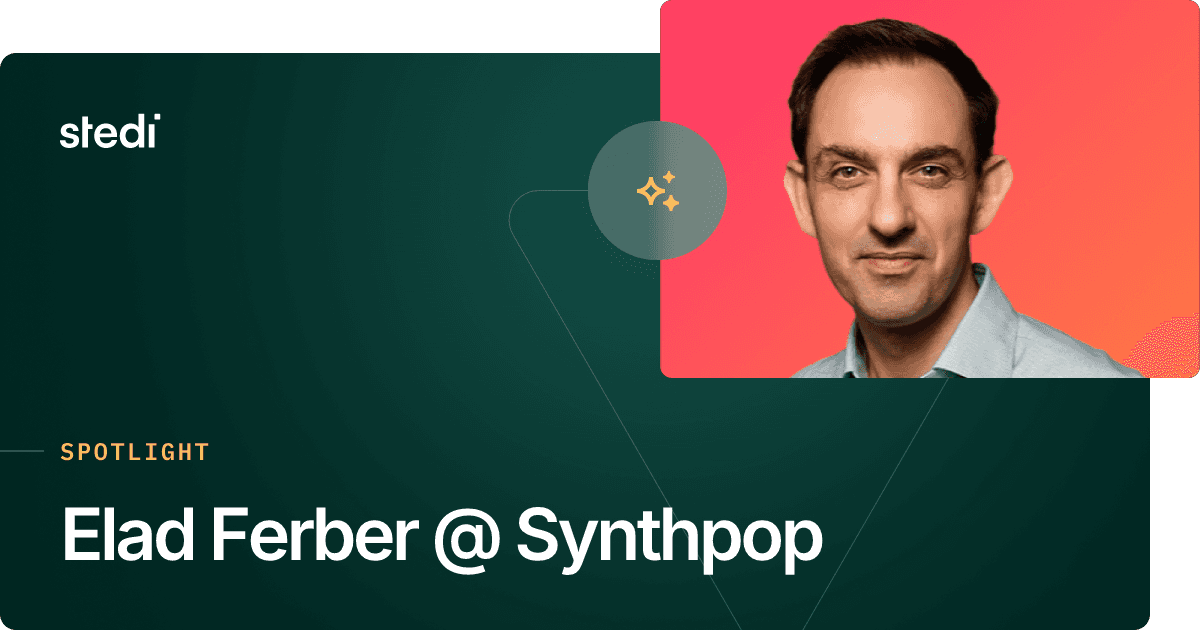
A spotlight is a short-form interview with a leader in health tech. In this spotlight, you'll hear from Elad Ferber, CEO of Synthpop.
What does Synthpop do?
We automate the administrative patient journey in healthcare.
Most healthcare organizations are still dealing with fragmented workflows across intake, insurance verification, patient communication, scheduling, and revenue cycle operations. The result is a lot of manual work, long delays, and frustrated staff.
At Synthpop, we deploy AI agents that handle those workflows while orchestrating how work moves across systems, teams, patients, and payers. The goal isn't to automate a single task. It's to help healthcare organizations run the entire administrative journey more efficiently.
What matters most to us is reducing time to treatment. Every day a patient spends waiting on paperwork, verification, or follow-up is a delay in care. If we can remove that friction, we improve both operational performance and patient outcomes.
How did you end up working in health tech?
I actually started my career in aerospace, building autonomous systems and drones. Later, I founded and led healthcare technology companies focused on sleep medicine and diagnostics.
What struck me about healthcare wasn't the clinical complexity – it was the administrative burden. I saw talented people spending huge amounts of time on paperwork, phone calls, and manual processes instead of helping patients.
When modern AI became practical, it felt like a once-in-a-lifetime opportunity. Healthcare has some of the most important workflows in the world, but many of them are still incredibly manual.
Synthpop started because I believed AI could remove that burden and help patients get to care faster. That's still the mission that motivates us today.
How does your role intersect with revenue cycle management (RCM)?
A lot of what we do sits directly inside the revenue cycle.
Whether it's insurance verification, benefits validation, authorization workflows, patient outreach, or documentation review, these are all operational processes that impact how quickly care is delivered and how quickly providers get paid.
My role is making sure we build systems that can automate those workflows reliably and at scale. That means understanding where customers experience bottlenecks, helping them operationalize AI safely, and ensuring we deliver measurable results.
To be honest, the technology is only part of the equation. Trust is just as important. Healthcare organizations need confidence that these systems will perform consistently before they can become part of critical business operations.
What do you think RCM will look like two years from now?
I think RCM is moving from workflow automation to system-level orchestration.
Today, most organizations still manage eligibility, authorizations, patient communications, and billing as separate processes. Over the next two years, AI will increasingly coordinate those activities as a connected system rather than a collection of tasks.
The breakthrough won't be smarter models. It will be better orchestration. AI will handle much of the routine administrative work, while humans focus on exceptions, judgment, and patient relationships.
I also think organizations will shift their focus beyond cost savings. The metric that matters most is time to treatment. The faster we can move patients from referral to care, the better the outcome for patients, providers, and the healthcare system as a whole.