Spotlight: Sourabh Agrawal @ CombineHealth
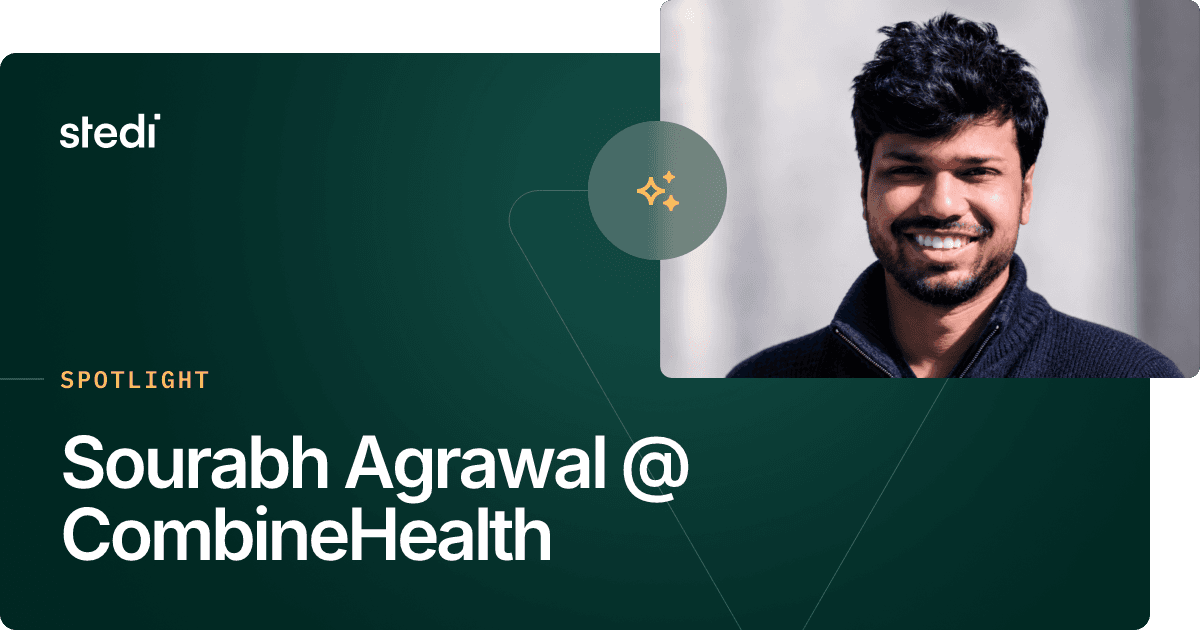
A spotlight is a short-form interview with a leader in health tech. In this spotlight, you'll hear from Sourabh Agrawal, co-founder and CEO of CombineHealth.
What does CombineHealth do?
At CombineHealth, we are building an AI workforce to run the full revenue cycle for healthcare organizations. Our AI agents handle workflows end-to-end – from patient eligibility verification and medical coding to claim submission, payment posting, reconciliation, and denial management. They learn from every insurance interaction, making the revenue cycle process smarter and more adaptive as payer rules evolve.
How did you end up working in health tech?
While building UpTrain AI, I had the opportunity to work with health tech companies that were struggling with reimbursements. As we spoke with 100+ providers and revenue cycle leaders, we realized how big the unpaid reimbursement problem is in healthcare – and we couldn't resist trying to solve it.
For us, CombineHealth is about more than building a successful business. Healthcare is the backbone of every society, and we want to do our part to make the system work more fairly for everyone.
How does your role intersect with revenue cycle management (RCM)?
I sit at the intersection of revenue cycle management and AI. My role is to deeply understand how RCM professionals think – how coders, billers, eligibility specialists, and denial teams make decisions – and translate that into AI agents that can perform the same workflows with high accuracy.
Over the last few years, I have personally worked through thousands of medical charts, eligibility responses, and denials. That hands-on exposure has helped me understand the RCM domain at a much deeper level and build agents that reflect how the best RCM teams actually operate.
At CombineHealth, I use this domain experience to oversee our technology and AI development, ensuring our agents are accurate, reliable, and aligned with real-world revenue cycle workflows.
What do you think RCM will look like two years from now?
We believe the future of RCM work will be hybrid. Over the next two years, domain experts will work alongside digital employees – not just AI copilots, but AI agents that can actually execute workflows end-to-end.
RCM is complex, manual, and full of opportunities to improve both accuracy and efficiency. Routine workflows like eligibility verification, medical coding, claim submission, payment posting, and AR follow-up will increasingly be handled by AI agents, with domain experts stepping in only for complex, ambiguous, or edge-case scenarios.