Spotlight: Tomasz Bachosz @ Ona Health
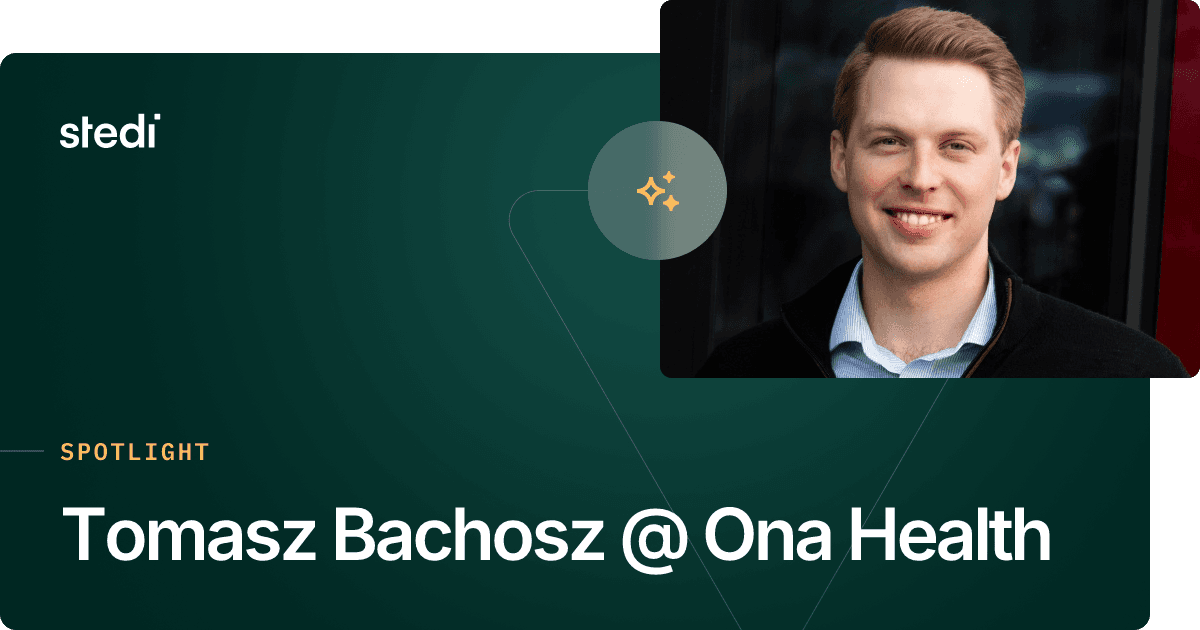
A spotlight is a short-form interview with a leader in health tech. In this spotlight, you'll hear from Tomasz Bachosz, founder and CEO of Ona Health.
What does Ona Health do?
Ona Health is the operating system for modern clinics — a single platform that replaces the tangle of tools practices juggle today, combining CRM, EHR, and revenue cycle management in one place. We run the entire back office: an AI receptionist that handles scheduling and patient communication, plus documentation, coding, claim prep and submission, follow-ups, and the reporting that tells owners how the practice is actually doing. AI sits underneath all of it, turning every patient interaction into structured clinical and billing data and surfacing insight the team would otherwise never have time to find. The payoff is direct: cleaner coding and fewer denials mean practices capture more of the revenue they've already earned, while automation strips out the admin and cost that usually comes with it. The goal is simple: more revenue, less cost, less admin — letting any practice, of any size, run like it has a full back office without needing one.
How did you end up working in health tech?
I've been building startups for 10 years, with a background in Computer Science and degrees from NYU and Oxford. Before Ona I co-founded and was CTO of Healfy, and spent time at Inflow — and across both I saw up close how much of healthcare's cost and friction isn't clinical at all. It's administrative and operational. That stuck with me. Building a women's health app later sharpened the point: when you sit with real patient data, you see how much signal gets lost simply because no one has the time or tools to structure it. Once it was clear that AI could actually read and organize the mess - the conversations, the records, the patterns hiding in everyday practice data - health tech stopped being an interesting problem and became the obvious one to spend the next decade on.
How does your role intersect with revenue cycle management (RCM)?
RCM is the part of healthcare where good software has the most immediate, measurable payoff — a clean claim that gets paid on the first pass is real money a clinic keeps. As CEO, my job is to make sure the whole pipeline, from the patient conversation to the submitted 837 and the returned 835, is one connected flow rather than five disconnected tools. That's exactly why we build on Stedi: instead of wrestling with clearinghouse plumbing, enrollment, and X12 formatting ourselves, we get a programmable API and can put our engineering into the parts patients and clinicians actually feel.
What do you think RCM will look like two years from now?
I think the "biller as data-entry clerk" role largely disappears and RCM becomes something that happens in the background. Claims will be assembled and scrubbed at the moment of care, not batched days later, and most denials will be caught before submission rather than appealed after. This is already how it works at Ona, and it feels like magic compared to the systems clinics are used to. The infrastructure layer underneath - clearinghouses, enrollment, eligibility - is already going API-native and invisible for us through Stedi, so the competitive edge moves to whoever can turn a raw clinical interaction into a clean, payable claim with the least human touch.