Spotlight: Chetan Patel @ Basata
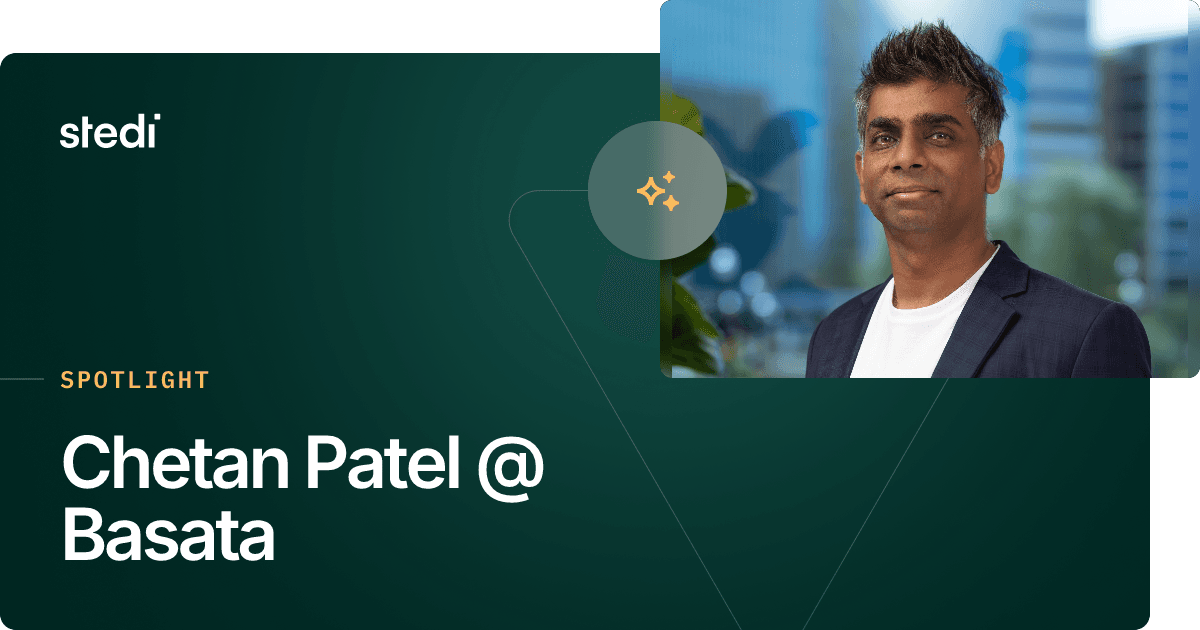
A spotlight is a short-form interview with a leader in health tech. In this spotlight, you'll hear from Chetan Patel, Co-founder and President of Basata.
What does Basata do?
Basata makes better healthcare simple and abundant. Currently, healthcare’s capacity is overwhelmed by the complexity of fragmented systems, manual processes, handoffs, and administrative work that slow teams down and leave patients waiting.
Closing that gap requires trusted infrastructure designed around how work actually moves through healthcare. Basata is building that trusted platform where care teams and intelligent agents work cohesively across the full operational workflow, so that people stay focused on the moments that require expertise, judgment, and patient connection. The result is more capacity, less friction, and a simpler path to care for patients.
How did you end up working in health tech?
I’ve been in the health tech space for a long time, first at Medtronic where I spent ten years working on implantable devices and leading the product and engineering teams focused on high-risk clinical systems. The moment that led me to Basata was actually a health scare with my wife. She fainted while we were on a flight, and in order to figure out what was wrong we had to go through all these administrative pain points. It took so much longer than it needed to in order to get her care, even though we have such incredible doctors and healthcare technology. I wanted to do something tangible to close that gap, so people with problems actually make it to the point of care.
How does your role intersect with revenue cycle management (RCM)?
I spend a lot of my time on where our platform goes next, and the revenue cycle keeps coming up because so much of it starts at the front desk. When a patient is referred or calls to schedule, that's also when coverage gets checked, the right appointment gets picked, and the practice finds out whether it can get paid for the visit. If that step goes wrong, the practice doesn't hear about it until weeks later, as a denial or a surprise bill for the patient.
Our AI agents already do a lot of that front-end work for specialty practices. When our voice agent books a patient, or our referral agent processes an incoming fax, it runs a real-time eligibility check through Stedi, so staff know before the visit whether coverage is active. That puts us at the front door of the revenue cycle. My job is to make sure the work we do there sets up everything that comes after it.
What do you think RCM will look like two years from now?
I think the front end and the back end of the revenue cycle will grow much closer together. Today, what a practice learns when it schedules a patient often doesn't reach the billing team until something has already gone wrong. Agents that work across the whole workflow can fix that, because the agent that checked coverage at scheduling can carry that context forward.
For us, that starts with the eligibility checks we already run. We're exploring collecting co-pays in the same conversation where a patient books, so the patient knows what they owe up front and staff don't have to chase it later. We're also looking at prior authorizations and claims, where most of the work is getting the right information from the right place at the right time. Agents handle that kind of complexity well.
Two years from now, I expect the practices that do best will be the ones that catch problems at intake rather than cleaning them up after the visit. Their staff will spend less time on hold with payers and more time with patients.