Spotlight: Suket Shah @ Mira Health
Jan 19, 2026

Company

Spotlight: Suket Shah @ Mira Health

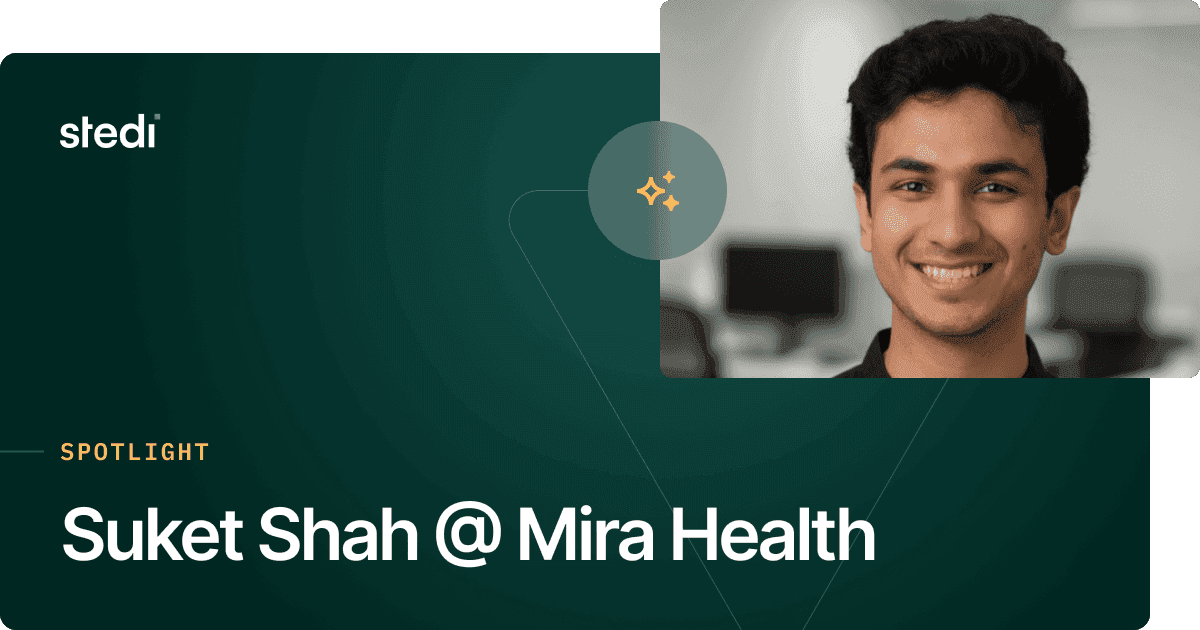
A spotlight is a short-form interview with a leader in health tech. In this spotlight, you'll hear from Suket Shah, co-founder of Mira Health.

What does Mira Health do? 

Mira Health is a vertical AI platform built specifically for private practice orthopedics.

We automate the administrative burden that slows down high-volume clinics, from the moment a patient calls for an appointment to the moment the claim is paid. By combining AI-driven patient intake, ambient clinical documentation, and automated coding, we help orthopedic surgeons focus on surgery rather than data entry.

Our goal is to act as the "AI Operating System" for private practices, allowing them to remain independent and profitable in a consolidating market.

How did you end up working in health tech?

I view our work as the intersection of clinical empathy and engineering velocity.

I come from a pure engineering background, with a focus on building scalable, high-velocity software systems at Google. However, I teamed up with my co-founders, Pavan and Dr. Pinnamaneni, who witnessed the burnout and administrative friction of private practice firsthand.

We joined forces because we saw a massive gap in orthopedics: it is a high-revenue, high-complexity specialty that was being served by legacy, generalist software. I knew that solving these problems required a purpose-built, "vertical" approach.

How does your role intersect with revenue cycle management (RCM)?

I view RCM as a process that starts before the patient walks in the door, not just when the bill is sent.

In orthopedics, revenue leakage happens upstream when a front desk misses a Letter of Protection (LOP), when a Workers' Comp case is misclassified, or when clinical notes lack the specificity required for proper coding.

My work at Mira focuses on ensuring data integrity at the source. We screen patients for eligibility during intake and automate the clinical documentation to ensure accurate coding. By structuring this data upfront, we enable "one-click" billing that drastically reduces denials downstream.

What do you think RCM will look like two years from now?

I believe the future of RCM is "Agent-to-Agent" commerce. Instead of humans sitting on phones arguing about claims, we will see AI agents on the provider side negotiating directly with AI agents on the payer side in real-time.

For this reality to work, we need a modern, structured framework for these agents to exchange data instantly. That is why infrastructure like Stedi is critical. It provides the rails for these AI agents to interact, ultimately reducing administrative bloat and creating a more liquid, efficient healthcare system.

Spotlight: Suket Shah @ Mira Health

A spotlight is a short-form interview with a leader in health tech. In this spotlight, you'll hear from Suket Shah, co-founder of Mira Health.

What does Mira Health do? 

Mira Health is a vertical AI platform built specifically for private practice orthopedics.

We automate the administrative burden that slows down high-volume clinics, from the moment a patient calls for an appointment to the moment the claim is paid. By combining AI-driven patient intake, ambient clinical documentation, and automated coding, we help orthopedic surgeons focus on surgery rather than data entry.

Our goal is to act as the "AI Operating System" for private practices, allowing them to remain independent and profitable in a consolidating market.

How did you end up working in health tech?

I view our work as the intersection of clinical empathy and engineering velocity.

I come from a pure engineering background, with a focus on building scalable, high-velocity software systems at Google. However, I teamed up with my co-founders, Pavan and Dr. Pinnamaneni, who witnessed the burnout and administrative friction of private practice firsthand.

We joined forces because we saw a massive gap in orthopedics: it is a high-revenue, high-complexity specialty that was being served by legacy, generalist software. I knew that solving these problems required a purpose-built, "vertical" approach.

How does your role intersect with revenue cycle management (RCM)?

I view RCM as a process that starts before the patient walks in the door, not just when the bill is sent.

In orthopedics, revenue leakage happens upstream when a front desk misses a Letter of Protection (LOP), when a Workers' Comp case is misclassified, or when clinical notes lack the specificity required for proper coding.

My work at Mira focuses on ensuring data integrity at the source. We screen patients for eligibility during intake and automate the clinical documentation to ensure accurate coding. By structuring this data upfront, we enable "one-click" billing that drastically reduces denials downstream.

What do you think RCM will look like two years from now?

I believe the future of RCM is "Agent-to-Agent" commerce. Instead of humans sitting on phones arguing about claims, we will see AI agents on the provider side negotiating directly with AI agents on the payer side in real-time.

For this reality to work, we need a modern, structured framework for these agents to exchange data instantly. That is why infrastructure like Stedi is critical. It provides the rails for these AI agents to interact, ultimately reducing administrative bloat and creating a more liquid, efficient healthcare system.

Spotlight: Suket Shah @ Mira Health

A spotlight is a short-form interview with a leader in health tech. In this spotlight, you'll hear from Suket Shah, co-founder of Mira Health.

What does Mira Health do? 

Mira Health is a vertical AI platform built specifically for private practice orthopedics.

We automate the administrative burden that slows down high-volume clinics, from the moment a patient calls for an appointment to the moment the claim is paid. By combining AI-driven patient intake, ambient clinical documentation, and automated coding, we help orthopedic surgeons focus on surgery rather than data entry.

Our goal is to act as the "AI Operating System" for private practices, allowing them to remain independent and profitable in a consolidating market.

How did you end up working in health tech?

I view our work as the intersection of clinical empathy and engineering velocity.

I come from a pure engineering background, with a focus on building scalable, high-velocity software systems at Google. However, I teamed up with my co-founders, Pavan and Dr. Pinnamaneni, who witnessed the burnout and administrative friction of private practice firsthand.

We joined forces because we saw a massive gap in orthopedics: it is a high-revenue, high-complexity specialty that was being served by legacy, generalist software. I knew that solving these problems required a purpose-built, "vertical" approach.

How does your role intersect with revenue cycle management (RCM)?

I view RCM as a process that starts before the patient walks in the door, not just when the bill is sent.

In orthopedics, revenue leakage happens upstream when a front desk misses a Letter of Protection (LOP), when a Workers' Comp case is misclassified, or when clinical notes lack the specificity required for proper coding.

My work at Mira focuses on ensuring data integrity at the source. We screen patients for eligibility during intake and automate the clinical documentation to ensure accurate coding. By structuring this data upfront, we enable "one-click" billing that drastically reduces denials downstream.

What do you think RCM will look like two years from now?

I believe the future of RCM is "Agent-to-Agent" commerce. Instead of humans sitting on phones arguing about claims, we will see AI agents on the provider side negotiating directly with AI agents on the payer side in real-time.

For this reality to work, we need a modern, structured framework for these agents to exchange data instantly. That is why infrastructure like Stedi is critical. It provides the rails for these AI agents to interact, ultimately reducing administrative bloat and creating a more liquid, efficient healthcare system.

Share

Twitter
LinkedIn

Get started with Stedi

Get started with Stedi

Automate healthcare transactions with developer-friendly APIs that support thousands of payers. Contact us to learn more and speak to the team.

Get updates on what’s new at Stedi

Get updates on what’s new at Stedi

Get updates on what’s new at Stedi

Get updates on what’s new at Stedi

Backed by

Stedi is a registered trademark of Stedi, Inc. All names, logos, and brands of third parties listed on our site are trademarks of their respective owners (including “X12”, which is a trademark of X12 Incorporated). Stedi, Inc. and its products and services are not endorsed by, sponsored by, or affiliated with these third parties. Our use of these names, logos, and brands is for identification purposes only, and does not imply any such endorsement, sponsorship, or affiliation.

Get updates on what’s new at Stedi

Backed by

Stedi is a registered trademark of Stedi, Inc. All names, logos, and brands of third parties listed on our site are trademarks of their respective owners (including “X12”, which is a trademark of X12 Incorporated). Stedi, Inc. and its products and services are not endorsed by, sponsored by, or affiliated with these third parties. Our use of these names, logos, and brands is for identification purposes only, and does not imply any such endorsement, sponsorship, or affiliation.

Get updates on what’s new at Stedi

Backed by

Stedi is a registered trademark of Stedi, Inc. All names, logos, and brands of third parties listed on our site are trademarks of their respective owners (including “X12”, which is a trademark of X12 Incorporated). Stedi, Inc. and its products and services are not endorsed by, sponsored by, or affiliated with these third parties. Our use of these names, logos, and brands is for identification purposes only, and does not imply any such endorsement, sponsorship, or affiliation.