Spotlight: David Java @ AgenciesForge
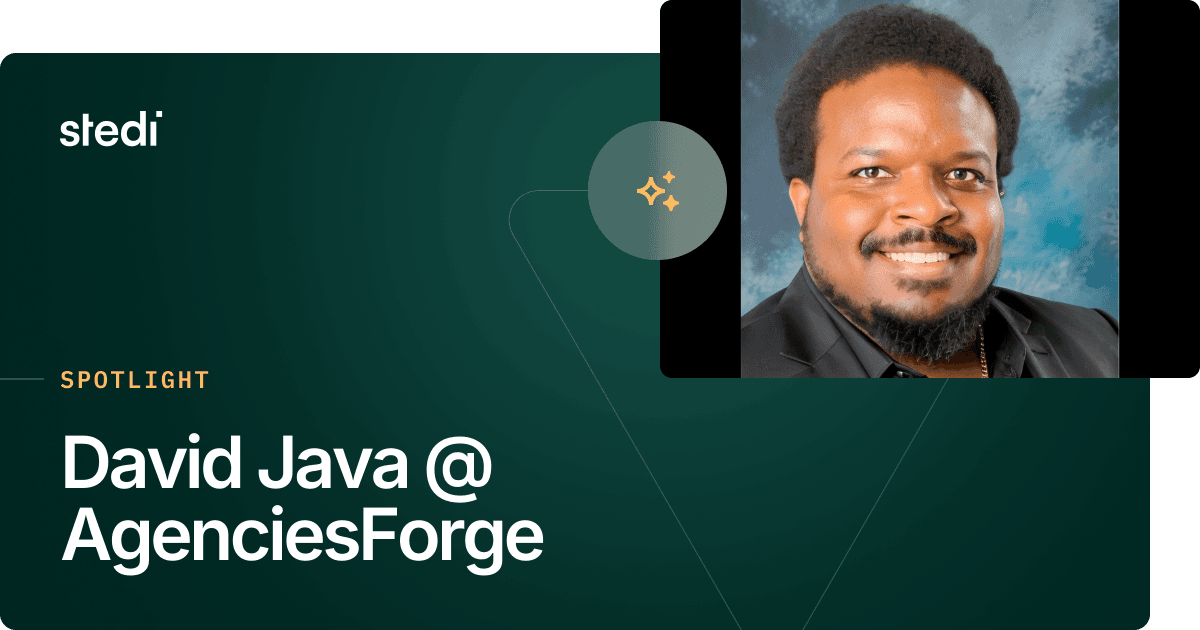
A spotlight is a short-form interview with a leader in health tech. In this spotlight, you'll hear from David Java, CEO of AgenciesForge.
What does AgenciesForge do?
AgenciesForge runs care agencies from start to finish: behavioral health, DD/IDD, home health, and home care. Founders use it to get certified and enrolled in Medicaid. Running agencies use it for charting, scheduling, EVV, and billing in one system. An AI assistant, AI Forge, does real clinical, billing, and compliance work, and every change it makes waits for a person to confirm. Pricing is flat, with unlimited clinicians and no per-seat fees.
How did you end up working in health tech?
I ended up in health tech because of an agency owner. She was going through certification for adult and youth SUD residential housing, and she had paid more than $30,000 for it. I sat down with her and went through the process step by step. What she needed was a clear path: which documents, in what order, for her kind of agency, in her state. I realized I could build that path into software and make it far cheaper. We worked on it together, and in April 2026 the first version of AgenciesForge went live.
That first version was only the certification path: a step-by-step guide through every phase, with the policies and documents drafted for the agency’s own state. Once it worked, I asked how to keep those customers after they were certified. The answer was to run the agency they had just built. So I planned out an EHR to sit alongside it, and set out to make it better than any other system out there.
The road from there was one piece at a time. Within a few weeks the EHR had charting, scheduling, a patient portal, and billing. For billing we partnered with Stedi and put every eligibility check, claim, and remittance through one clearinghouse, because an agency that can’t get paid can’t stay open. Then came the service lines, each with its own rules: DD/IDD and skilled home health with OASIS in May, ePrescribing right after, and non-medical home care by the end of June. Along the way our AI assistant, AI Forge, grew from answering questions to doing the work, with a person confirming every change.
On the coding side, every feature started the same way: I would describe what an agency actually needs, in plain language, and then design it, build it, and test it. In six months that came to more than 2,200 changes to the codebase and about 450 test files, because software that holds patient records and submits Medicaid claims has to be right, not just fast. A few rules never bent: patient data is encrypted field by field, every vendor that touches it signs a BAA, and every AI call runs through AWS Bedrock under that agreement. Building that way is how a full EHR went from an idea to production in months.
It started with one agency owner and one expensive certification. That’s where we are today, and I love what we’ve built.
How does your role intersect with revenue cycle management (RCM)?
I design how a claim moves through the product. That covers eligibility before the visit, a 15-point check before submission, and claim acknowledgments and remittances posting back automatically. Routine denials get an appeal without anyone retyping the claim. Most of what agencies lose isn’t a hard denial; it’s small errors caught too late. So my job is moving each check as early as possible.
What do you think RCM will look like two years from now?
Less work after the claim goes out, more before it. Checks that happen today after a denial, like authorizations, payer-specific rules, and documentation gaps, will run while the note is still being written. Small agencies will get the same denial prevention large health systems have, because it will come built into the system they already use, not as a separate service.