Spotlight: Hashem Abdou @ Oasys
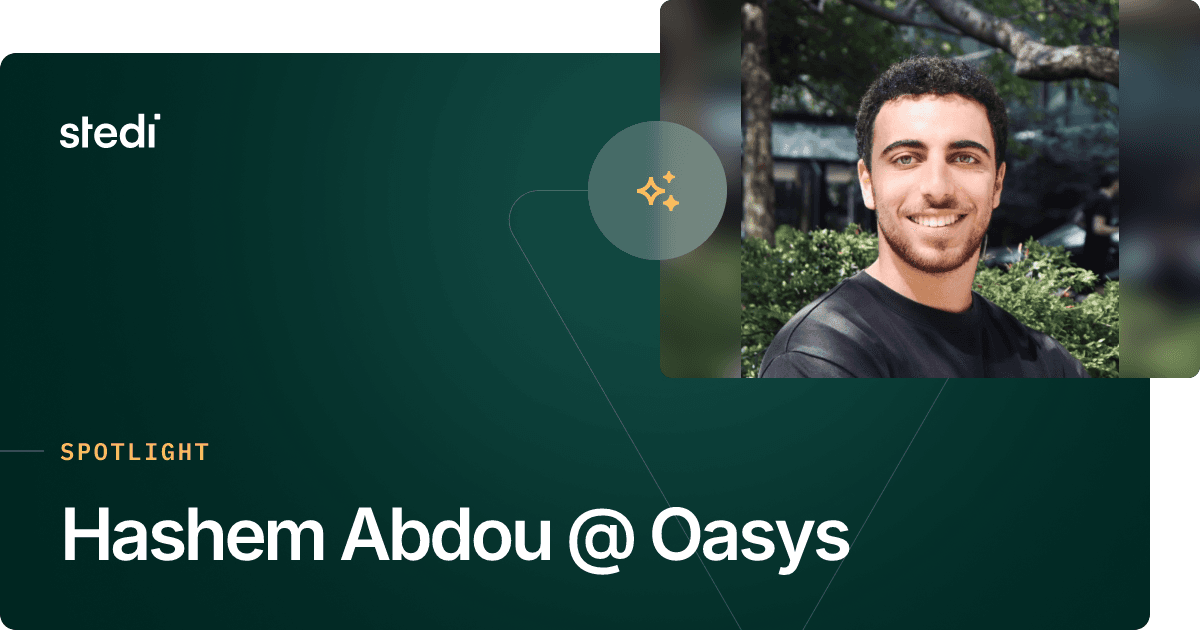
A spotlight is a short-form interview with a leader in health tech. In this spotlight, you'll hear from Hashem Abdou, founder and CEO of Oasys.
What does Oasys do?
Oasys is an AI-native EHR and practice management platform built specifically for group behavioral health practices – typically 5 to 50 clinicians. Notes, scheduling, billing, and outcomes measurement in one system.
We also run revenue cycle management as a managed service for practices that want it, so the software and the billing aren't two different vendors pointing at each other. Most behavioral health software was either designed for solo practitioners or adapted from medical specialties that don't look anything like therapy. Group practices ended up with tools that fit neither.
How did you end up working in health tech?
My mother is a clinical psychologist, so I grew up watching how much of her week went to things that weren't clinical work. I studied biomedical engineering and computer science, and my research was in affective computing, which predicts mood states from physiological signals like HRV and actigraphy.
The research made me think behavioral health was missing objective measurement infrastructure. Building Oasys made me realize you can't get to that layer without first owning the system of record. So we started with the boring part.
How does your role intersect with revenue cycle management (RCM)?
Directly. We don't sell software and hand billing off to a third party – we run it. That means I'm in the details: payer enrollment, claim denials, ERA reconciliation, the specific ways behavioral health CPT codes and unit-based billing break assumptions built for medical billing.
Owning both sides changes what you build. When a claim gets denied, we can see whether the root cause was in the note, the payer config, or the clearinghouse, and then we can fix it once instead of patching around it every month.
What do you think RCM will look like two years from now?
I think the routine work (coding, scrubbing, first-pass denial triage) gets substantially automated. That's already underway. What I think matters more: the value moves upstream, to eligibility accuracy and clean data capture at the point of care.
Fixing a claim after submission is a losing game compared to never generating a bad one. And in behavioral health specifically, as payers push toward measurement-based reimbursement, claims will start carrying outcomes data. RCM stops being a back-office function and becomes part of how a practice proves its clinical value.