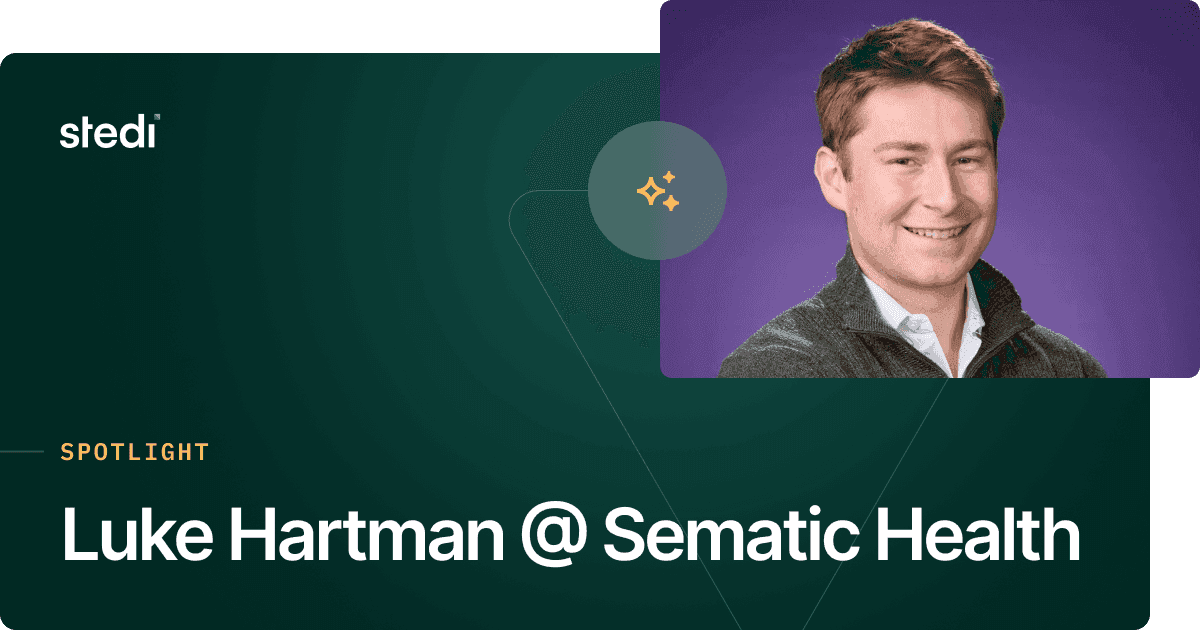
Spotlight: Luke Hartman @ Sematic Health
Jan 26, 2026
Spotlight

A spotlight is a short-form interview with a leader in health tech. In this spotlight, you'll hear from Luke Hartman, founder of Sematic Health.
What does Sematic Health do?
We help primary care practices run Medicare's new Advanced Primary Care Management (APCM) program: enrollment, care plans, care gap detection, eligibility, and monthly billing. We use AI to draft care plans and flag gaps in care like overdue screenings, medication issues, and missed follow-ups.
Most practices struggle to participate in APCM because the admin work is too heavy. We got it down to two minutes per patient. Practices add ~$700K per year in revenue per 1,000 eligible patients without hiring extra staff.
How did you end up working in health tech?
Health tech wasn't on my radar. I hadn't seen a doctor since pediatrics. That changed when I met my co-founder, Dr. David Brown, through an intro after a hackathon.
David is a practicing internist who owns two clinics. Small practices like his are the backbone of American healthcare, but they're getting squeezed out. He showed me the choice most practices face with APCM: spend hours on paperwork every month, or bill light and pray you don't get audited. We built software so they don't have to choose.
How does your role intersect with revenue cycle management (RCM)?
I spend most of my time on product and talking to customers, but everything we build touches billing. APCM revenue is monthly, not episodic. Every enrolled patient needs documented care coordination to support their monthly claims. Most practices do this manually, or may skip it entirely.
We track what the care team does, generate claim-ready documentation, and submit claims in bulk. Practices save 10+ hours a week and don't miss billing cycles.
What do you think RCM will look like two years from now?
Honestly, I don't know. I imagine it will look roughly the same but with software handling more of its rough edges.
We're betting that billing for monthly programs like APCM has to happen automatically. Otherwise, delivered care goes unbilled, and practices stop participating. The margins are too thin, the volume is too high, and the administrative lift is too heavy for manual work.

A spotlight is a short-form interview with a leader in health tech. In this spotlight, you'll hear from Luke Hartman, founder of Sematic Health.
What does Sematic Health do?
We help primary care practices run Medicare's new Advanced Primary Care Management (APCM) program: enrollment, care plans, care gap detection, eligibility, and monthly billing. We use AI to draft care plans and flag gaps in care like overdue screenings, medication issues, and missed follow-ups.
Most practices struggle to participate in APCM because the admin work is too heavy. We got it down to two minutes per patient. Practices add ~$700K per year in revenue per 1,000 eligible patients without hiring extra staff.
How did you end up working in health tech?
Health tech wasn't on my radar. I hadn't seen a doctor since pediatrics. That changed when I met my co-founder, Dr. David Brown, through an intro after a hackathon.
David is a practicing internist who owns two clinics. Small practices like his are the backbone of American healthcare, but they're getting squeezed out. He showed me the choice most practices face with APCM: spend hours on paperwork every month, or bill light and pray you don't get audited. We built software so they don't have to choose.
How does your role intersect with revenue cycle management (RCM)?
I spend most of my time on product and talking to customers, but everything we build touches billing. APCM revenue is monthly, not episodic. Every enrolled patient needs documented care coordination to support their monthly claims. Most practices do this manually, or may skip it entirely.
We track what the care team does, generate claim-ready documentation, and submit claims in bulk. Practices save 10+ hours a week and don't miss billing cycles.
What do you think RCM will look like two years from now?
Honestly, I don't know. I imagine it will look roughly the same but with software handling more of its rough edges.
We're betting that billing for monthly programs like APCM has to happen automatically. Otherwise, delivered care goes unbilled, and practices stop participating. The margins are too thin, the volume is too high, and the administrative lift is too heavy for manual work.

A spotlight is a short-form interview with a leader in health tech. In this spotlight, you'll hear from Luke Hartman, founder of Sematic Health.
What does Sematic Health do?
We help primary care practices run Medicare's new Advanced Primary Care Management (APCM) program: enrollment, care plans, care gap detection, eligibility, and monthly billing. We use AI to draft care plans and flag gaps in care like overdue screenings, medication issues, and missed follow-ups.
Most practices struggle to participate in APCM because the admin work is too heavy. We got it down to two minutes per patient. Practices add ~$700K per year in revenue per 1,000 eligible patients without hiring extra staff.
How did you end up working in health tech?
Health tech wasn't on my radar. I hadn't seen a doctor since pediatrics. That changed when I met my co-founder, Dr. David Brown, through an intro after a hackathon.
David is a practicing internist who owns two clinics. Small practices like his are the backbone of American healthcare, but they're getting squeezed out. He showed me the choice most practices face with APCM: spend hours on paperwork every month, or bill light and pray you don't get audited. We built software so they don't have to choose.
How does your role intersect with revenue cycle management (RCM)?
I spend most of my time on product and talking to customers, but everything we build touches billing. APCM revenue is monthly, not episodic. Every enrolled patient needs documented care coordination to support their monthly claims. Most practices do this manually, or may skip it entirely.
We track what the care team does, generate claim-ready documentation, and submit claims in bulk. Practices save 10+ hours a week and don't miss billing cycles.
What do you think RCM will look like two years from now?
Honestly, I don't know. I imagine it will look roughly the same but with software handling more of its rough edges.
We're betting that billing for monthly programs like APCM has to happen automatically. Otherwise, delivered care goes unbilled, and practices stop participating. The margins are too thin, the volume is too high, and the administrative lift is too heavy for manual work.
Share
Get started with Stedi
Automate healthcare transactions with developer-friendly APIs that support thousands of payers. Contact us to learn more and speak to the team.
Get updates on what’s new at Stedi
Developers
Resources
Backed by
Stedi is a registered trademark of Stedi, Inc. All names, logos, and brands of third parties listed on our site are trademarks of their respective owners (including “X12”, which is a trademark of X12 Incorporated). Stedi, Inc. and its products and services are not endorsed by, sponsored by, or affiliated with these third parties. Our use of these names, logos, and brands is for identification purposes only, and does not imply any such endorsement, sponsorship, or affiliation.
Developers
Resources
Backed by
Stedi is a registered trademark of Stedi, Inc. All names, logos, and brands of third parties listed on our site are trademarks of their respective owners (including “X12”, which is a trademark of X12 Incorporated). Stedi, Inc. and its products and services are not endorsed by, sponsored by, or affiliated with these third parties. Our use of these names, logos, and brands is for identification purposes only, and does not imply any such endorsement, sponsorship, or affiliation.
Developers
Resources
Get updates on what’s new at Stedi
Backed by
Stedi is a registered trademark of Stedi, Inc. All names, logos, and brands of third parties listed on our site are trademarks of their respective owners (including “X12”, which is a trademark of X12 Incorporated). Stedi, Inc. and its products and services are not endorsed by, sponsored by, or affiliated with these third parties. Our use of these names, logos, and brands is for identification purposes only, and does not imply any such endorsement, sponsorship, or affiliation.
