Where to use Stedi with voice AI agents
Voice AI agents use LLMs to hold real-time conversations with humans. In healthcare, they fall into three types: inbound agents that answer incoming patient calls to the provider, outbound agents that call payers with billing questions, and ambient agents that record notes during patient visits.
If you're building an inbound or outbound voice agent, Stedi's APIs can replace or supplement most phone calls with standard healthcare transactions. These transactions are faster, cheaper, and more reliable than voice calls alone.
This guide shows you why and how. It breaks down each type of healthcare voice AI agent at a high level and shows where Stedi fits in.
Types of voice AI agents in healthcare
Type | What it does | Use cases | Where Stedi fits in |
Inbound voice AI | Answers incoming phone calls from patients |
| Stedi’s real-time eligibility checks can verify a patient’s insurance coverage during intake or before scheduling. Eligibility checks can also answer questions about cost share amounts. |
Outbound voice AI | Calls payers for the billing team |
| Stedi’s real-time eligibility checks can confirm insurance coverage and benefits for specialty services in most cases. Eligibility checks can also confirm a patient’s information before claim submission, increasing the likelihood of an accepted claim. Stedi’s real-time claim status checks can get the status of a submitted claim. |
Ambient voice AI | Listens to clinical encounters and generates clinical notes | Clinical documentation and medical coding. | Stedi doesn’t help with clinical documentation or coding. Several Stedi Platform Partners do. |
Inbound voice AI agents
Inbound voice agents are a patient engagement channel. They answer phone calls from patients to providers and handle related tasks like scheduling visits, recording intake information, and answering questions about co-pays and deductibles.
Without a voice agent, most of this work would fall to front desk staff or an Interactive Voice Response (IVR) system. For providers, adding staff is expensive, and staffing costs grow with call volume. IVR is a cheaper option, but it offers a subpar patient experience. Many patients abandon the menu or just wait on hold for a person anyway. An inbound voice agent is the best of both: it’s conversational like staff and cheap to run like IVR.
Real-time eligibility checks for inbound voice agents
Before scheduling an appointment, providers and patients typically want to answer two questions:
-
Will the patient’s insurance cover this visit?
-
If yes, what payment should the provider collect from the patient before the visit?
Eligibility checks let an inbound voice agent answer these questions in real time – while the patient is on the phone – for pennies per request. They can also answer other benefits questions, like whether a service requires prior authorization.
Voice agents can run eligibility checks using Stedi’s JSON Real-Time Eligibility Check API. During the call, the agent needs to collect the patient's first name, last name, date of birth, payer, and (preferably) member ID. The agent can then look up the payer ID from the payer’s name using the Payers Search API. With the resolved payer ID, the agent has everything it needs to run an eligibility check.
An example JSON Real-Time Eligibility Check API request:
curl --request POST \
  --url "https://healthcare.us.stedi.com/2024-04-01/change/medicalnetwork/eligibility/v3" \
  --header "Authorization: <api_key>" \
  --header "Content-Type: application/json" \
  --data '{
    "tradingPartnerServiceId": "AHS",
    "encounter": {
      "serviceTypeCodes": ["30"]
    },
    "provider": {
      "organizationName": "ACME Health Services",
      "npi": "1999999984"
    },
    "subscriber": {
      "dateOfBirth": "19000101",
      "firstName": "Jane",
      "lastName": "Doe",
      "memberId": "1234567890"
    }
  }'
Eligibility responses come back in 1-3 seconds with information about the patient’s coverage and benefits, including cost share amounts. The agent can parse the JSON response to surface this information in the call:
{
  "benefitsInformation": [
    {
      "code": "1",                 // Active coverage
      "serviceTypeCodes": ["30"]   // Health Benefit Plan Coverage
    },
    {
      "code": "B",                 // Co-pay
      "benefitAmount": "20"        // $20 co-pay
    },
    {
      "code": "C",                 // Deductible
      "benefitAmount": "1000"      // $1000 deductible
    }
  ]
}
For tips on interpreting eligibility responses, see our docs and our How to read a 271 eligibility response in plain English blog post.
MCP server
Agents can also run real-time eligibility checks using Stedi’s MCP server. The server acts as a thin wrapper around our JSON Real-Time Eligibility Check API and Payers Search API. The MCP server also has built-in logic for recovering failed eligibility checks.
What if the patient is missing insurance information?
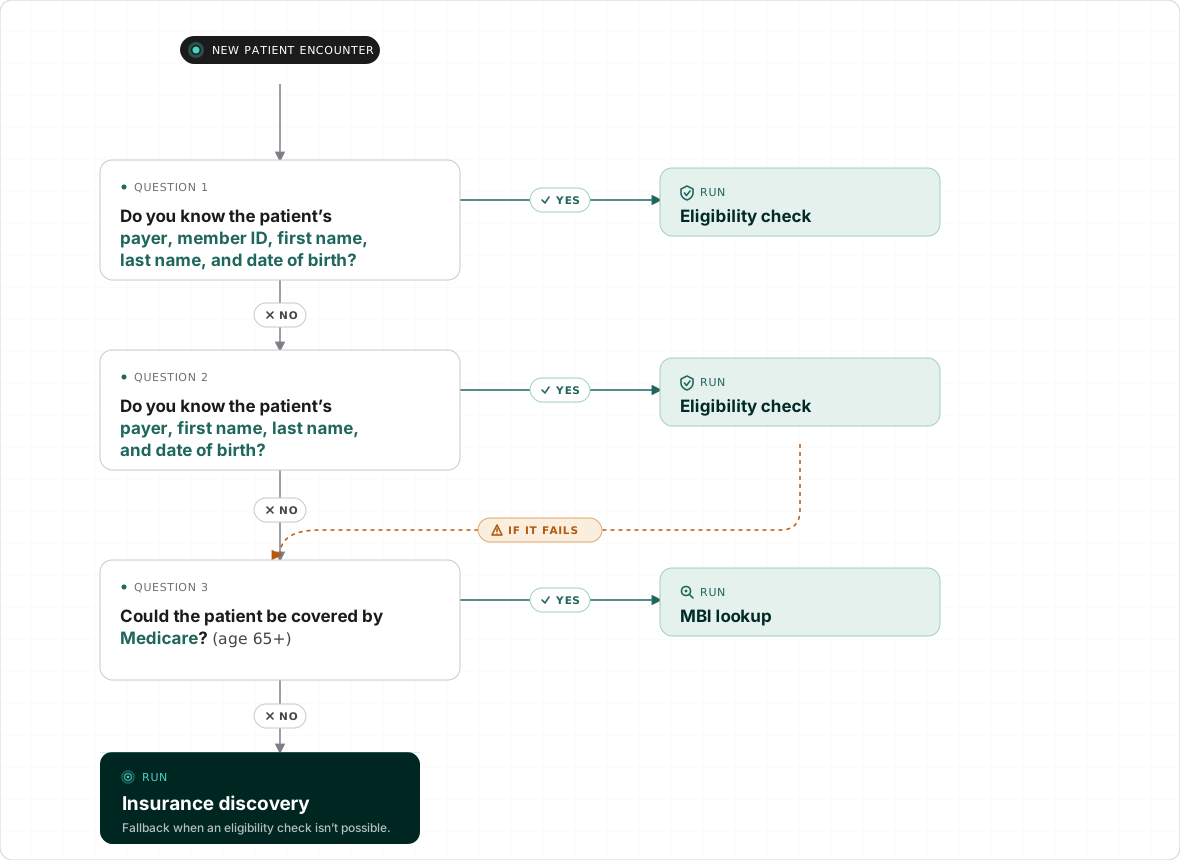
To run an eligibility check, the agent needs the patient's payer and, ideally, their member ID. If either is missing, the agent can follow this flow:
-
If the agent has the payer but not the member ID, try the eligibility check anyway. Some payers don't require a member ID. If the check fails with an AAA
75(Subscriber/Insured Not Found) or other similar AAA errors, continue to the next step. -
If the patient is likely on Medicare (typically 65 or older), run an MBI lookup. If the patient has Medicare coverage, the lookup returns their Medicare Beneficiary Identifier (MBI) and the full Medicare eligibility response. The lookup needs only the patient's demographics and, optionally, Social Security Number (SSN).
-
If the agent doesn’t know the payer, run an insurance discovery check using our Insurance Discovery API. Insurance discovery checks search across payers for active coverage using only demographic information: name, date of birth, state, ZIP code, and (optionally) SSN. For more details, see our Insurance Discovery docs.
Outbound voice AI agents
Outbound voice agents call payers on behalf of providers. These calls typically involve:
-
Verifying coverage and benefits for specialty services.
-
Confirming patient information before submitting a claim.
-
Checking the status of a submitted claim.
Without a voice agent, these calls are typically made by provider staff or business process outsourcing (BPO) workers. Human calls are flexible and can uncover edge-case benefit details, but they're labor-intensive and expensive. Most of what you pay for is hold time.
Outbound voice agents cut labor costs, but each call still takes minutes. They're most cost-effective when paired with real-time eligibility checks and real-time claim status checks.
Real-time eligibility checks for outbound voice agents
An eligibility response already contains most of what an outbound agent would call a payer about: coverage status, co-pays, deductibles, and member information. Eligibility checks are also quick (1-3 seconds) and inexpensive (pennies per check), especially compared to the time and costs of LLM-powered phone calls.
The agent should run an eligibility check using the same workflow as inbound calls before making a call to the payer. Only call the payer when the eligibility response can't answer the question. For example, some payers don’t return benefits for specialty services or prior authorization requirements in eligibility responses.
Even when a call is needed, the agent goes in with the member ID and basic plan information. That means fewer payer questions and shorter calls.
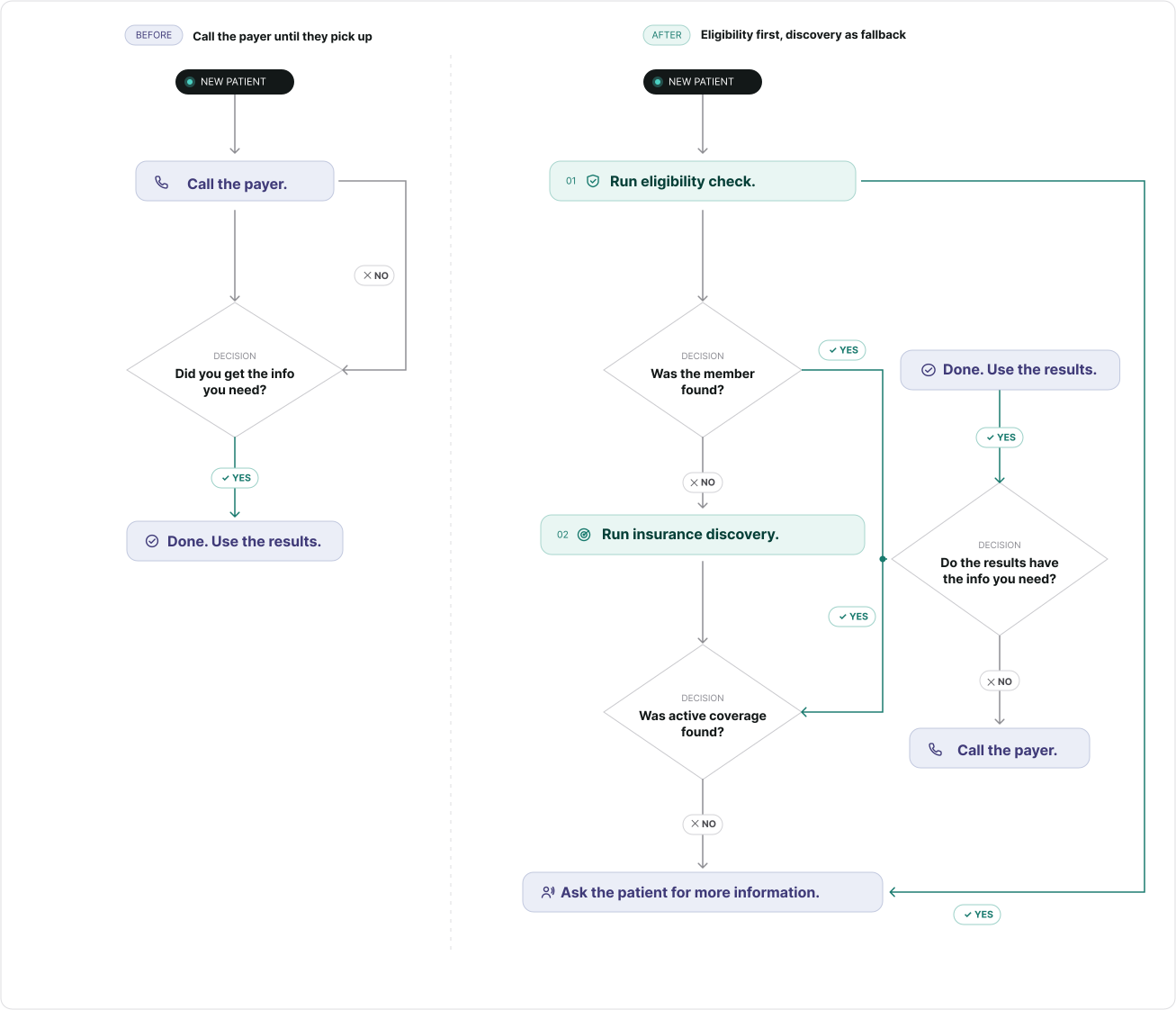
For the full workflow – when to check, when to call, and how to structure the agent – see our Using Stedi for outbound voice AI agent workflows blog post.
Real-time claim status checks for outbound voice agents
Providers commonly call payers to check the status of recently submitted or unpaid claims.
A real-time claim status check gets the current status of a claim at any stage of the process. Agents can run claim status checks using our JSON Real-Time Claim Status Check API:
curl --request POST \
  --url "https://healthcare.us.stedi.com/2024-04-01/change/medicalnetwork/claimstatus/v2" \
  --header "Authorization: <api_key>" \
  --header "Content-Type: application/json" \
  --data '{
    "encounter": {
      "beginningDateOfService": "20250630",
      "endDateOfService": "20250702"
    },
    "providers": [
      {
        "npi": "1999999984",
        "organizationName": "Provider Name",
        "providerType": "BillingProvider"
      }
    ],
    "subscriber": {
      "dateOfBirth": "19710101",
      "firstName": "Jane",
      "lastName": "Doe",
      "memberId": "UHC123456"
    },
    "tradingPartnerServiceId": "87726"
  }'
The responses include two types of codes that describe the claim’s current status:
-
A claim status category code for the broad state, such as accepted, rejected, pending, or finalized.
-
A claim status code for a more specific status for the claim.
Together, these codes show exactly where a claim stands with the payer. For example, in a JSON Real-Time Claim Status Check API response:
{
  "claims": [
    {
      "claimStatus": {
        "statusCategoryCode": "P1",  // Pending/In Process - The claim or encounter is in the adjudication system.
        "statusCode": "20",          // Accepted for processing.
 ...
      },
      ...
    }
  ],
  ...
}
Some status codes also require an entity identifier code that names who or what the status refers to. For example:
{
  "claims": [
    {
      "claimStatus": {
        "statusCategoryCode": "F2",  // Finalized/Denial
        "statusCode": "88",          // Entity not eligible for benefits for submitted dates of service.
        "entityCode": "QC",          // Patient
        ...
      },
      ...
    }
  ],
  ...
}
Ambient voice AI agents
Ambient voice AI agents listen to the visit between a provider and patient. They then produce structured documentation based on the conversation. During medical coding, that documentation determines the billing codes and service lines submitted in related claims.
Without an agent, providers write notes either during the visit, which distracts them, or after the visit from memory, which loses detail. Both paths introduce errors that show up downstream as inaccurate codes or missing service lines on the claim.
As a healthcare clearinghouse, Stedi isn’t involved in clinical documentation or medical coding. Several Stedi Platform Partners offer ambient voice AI agents and other products that help with documentation and coding.
Get started
If you're ready to get started with Stedi, reach out to us for a demo or free trial. We'll help you build an integration plan that fits your agent and use case.